What a relief
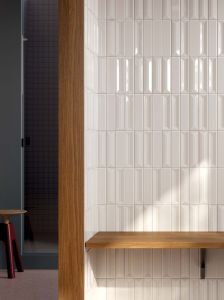
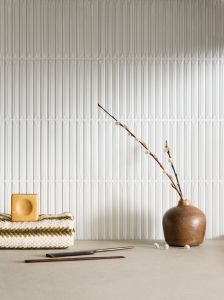
Tiles for walls can be ribbed, rippled, convex, concave, lightly textured or pitted; adding fluidity and movement to your kitchen, bathroom or utility.
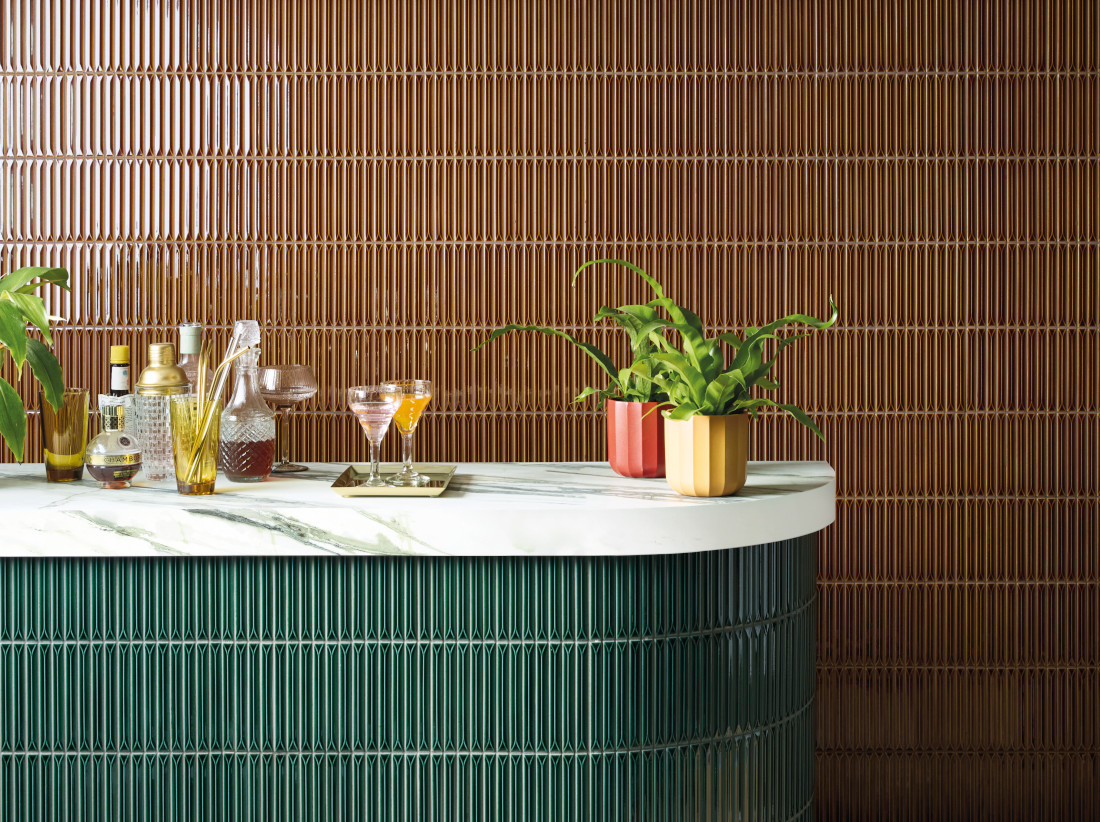
Wall tiles need not be flat. This may come as a revelation to some but an obvious design statement to others. As they do not need to be walked on, tiles for walls can be fluted, rippled, convex, concave or lightly textured or pitted. Floor tiles?…well, they are better off being flat.
Wall tiles are often used in bathrooms or kitchens and laundry rooms, due to their glazed nature; making them ideal for repelling water and wiping up any spills. However, it doesn’t mean to say they need always be one dimensional. The production of wall tiles allows them to have shape and two dimensions, sometimes by utilising moulds; this method accounting for the design of a number of our collections.
Although the look now is more elegant than utilitarian, often as part of schemes that pair country style with an urban aesthetic; we find adding a grid-like tile design is an attractively striking element, but one that’s not too overpowering in the overall scheme.
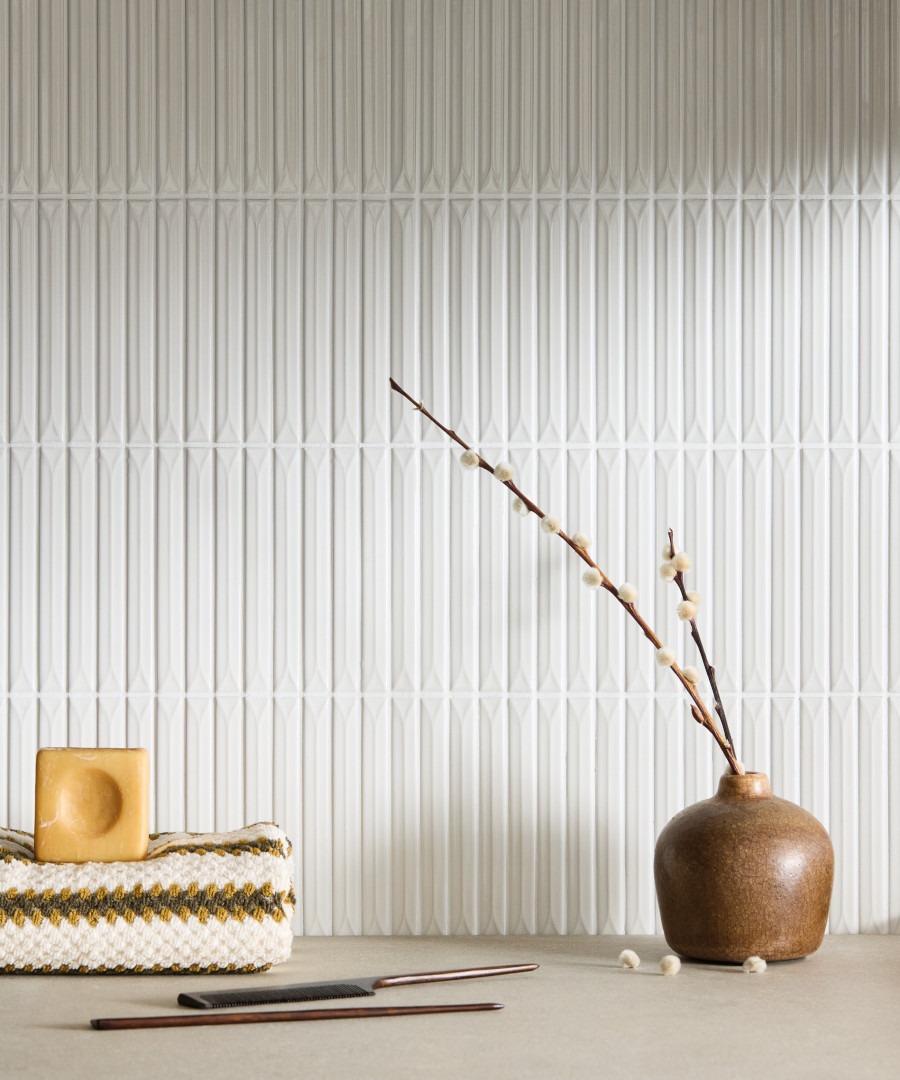

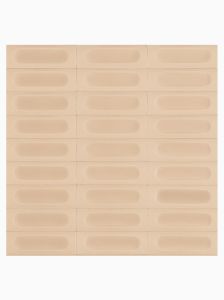
Some of the shades of relief style wall tiles are just mouth-watering. Our Tavolozza series, for example, has beautiful colours including an olive green and pretty pastel pink; lovely in bathrooms for creating a relaxing feel, alongside the distinctive fluidity of the curve design seen below.
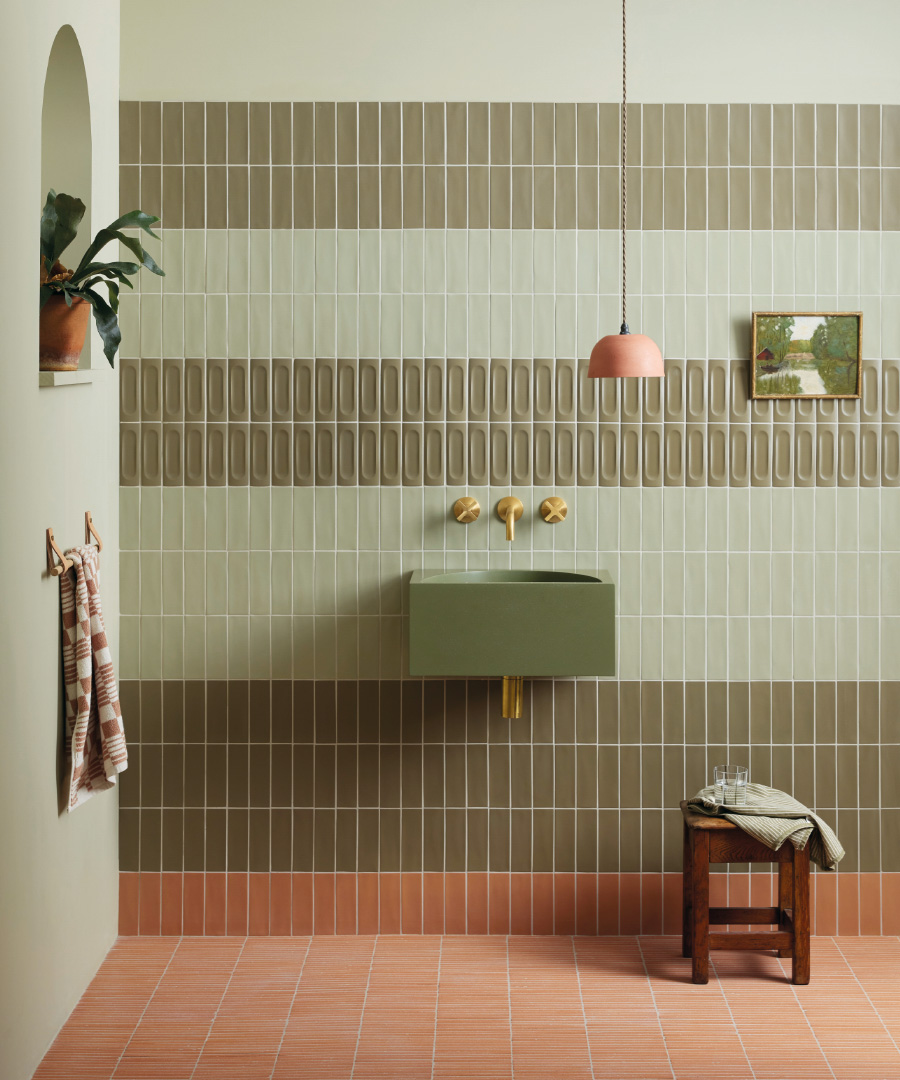
Occasionally, tiles come on a mesh backing for ease of fitting, rather like smaller traditional mosaic. Scolpito is a case in point; a range that’s available in a series of colours in an eye-catching mix of decors all attached to the mesh. When tiled they look like individual tiles across the wall, as seen in the room pictured here.
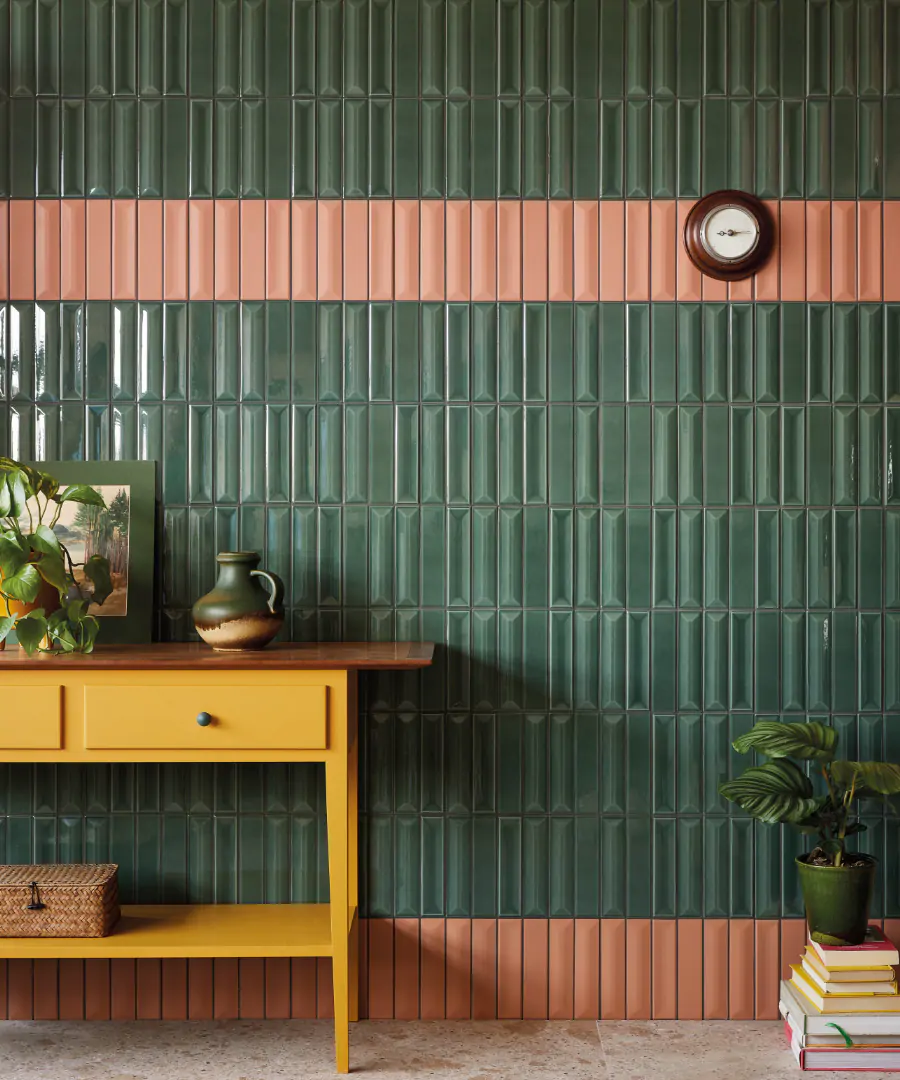
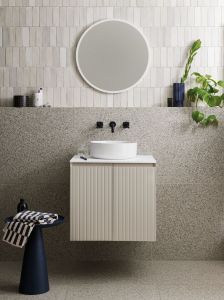
Curves and relief designs are not just the unique preserve of tiles. The worked look and feel of surfaces with a moulded or formed surface is fantastic on furniture too. We applied this aesthetic when working up our recent bathroom cabinetry. The Loop collection of wall-mounted and freestanding basin cabinetry features lovely fluted doors; both tactile and chic.