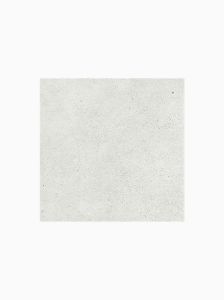
Creating seamless spaces...
Creative Director Rob Whitaker looks at how we use our outdoor spaces, with ideas and inspiration for smooth indoor to outdoor transition tiling.
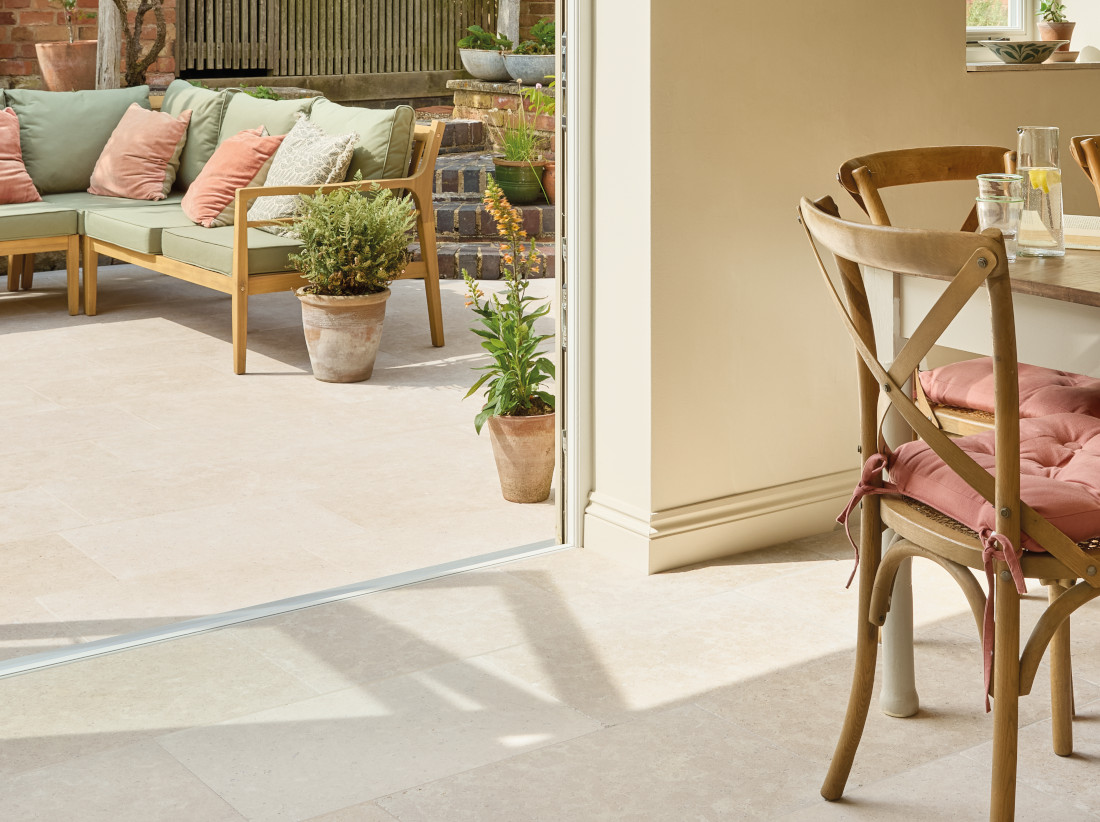
In the same way that for generations many of us lived with wholly boring and inadequate bathrooms, the paving and relaxation areas within our gardens were considered very much an afterthought. Our grandparents had much less leisure time than us, and gardens were more likely to be used to grow vegetables or for cut flowers than as a space for relaxation. My own grandparents, Daisy and Claude, had a garden that nowadays would be considered a small-holding. One section contained vegetables; broad beans and radish sown in the winter months, sprouts and cabbages in the spring and cucumber just before the summer. Late in the winter Claude would start preparing his sweet peas. All of this could be viewed from a patch of concrete and a single bench up by the house.
Many families like ours first started to explore warmer climes in the 70’s and 80’s and found themselves asking ‘why don’t we have lovely terracotta terraces? Why should we put up with dull sandstone slabs as a hard area for seating?’
The answer is that for many years there was simply nothing else available here that could withstand our British climate, and terracotta is simply too porous to cope with both the heavy rains and the drops in temperature. Luckily technology, like international travel, moves on and develops. Changes in porcelain manufacturing in recent years has enabled suppliers to create new products; tiles for walls and floors that are able to stand harsh weather, are easier to keep clean and still look beautifully natural too.
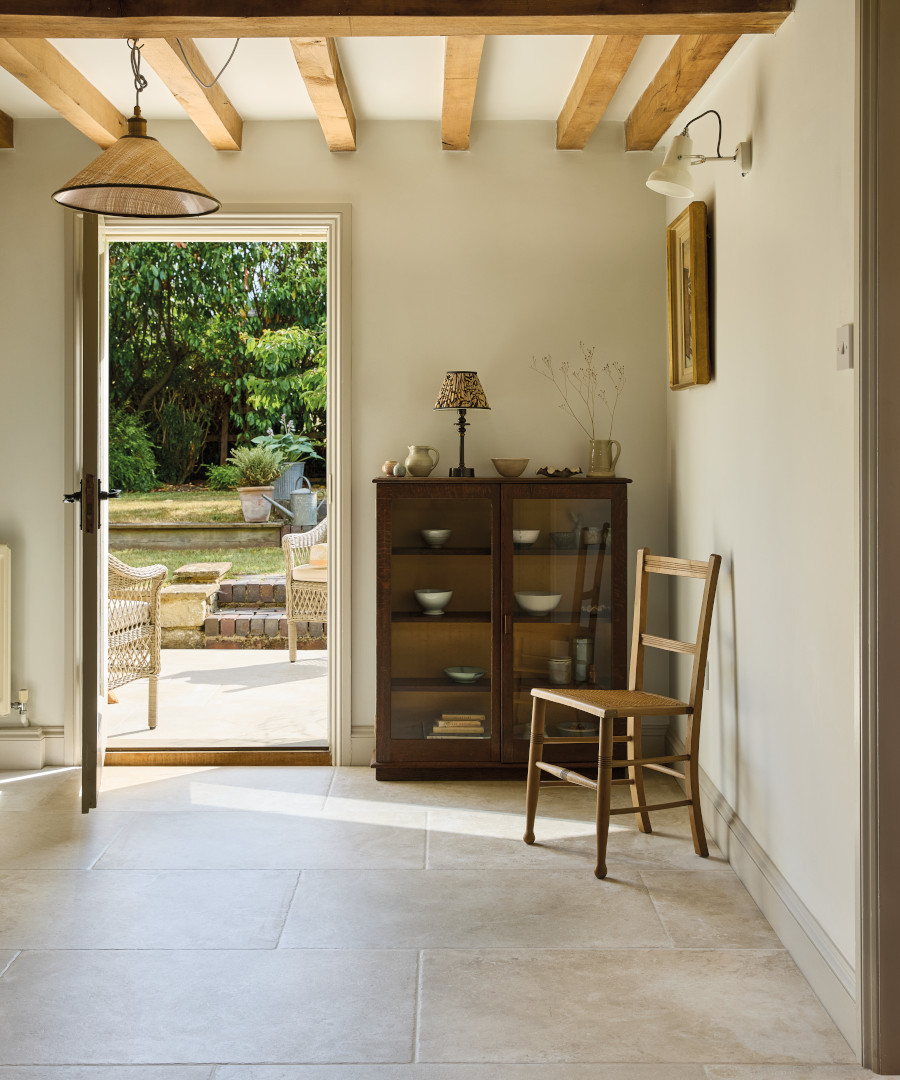

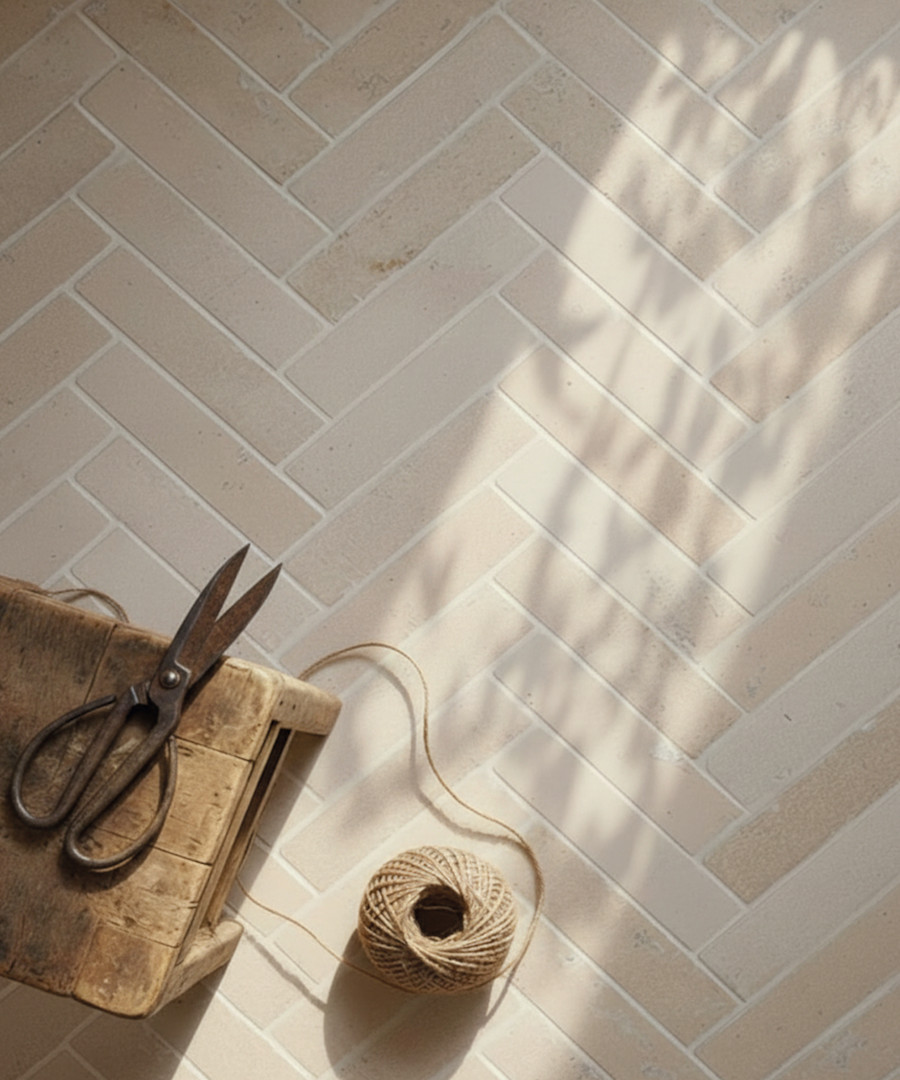
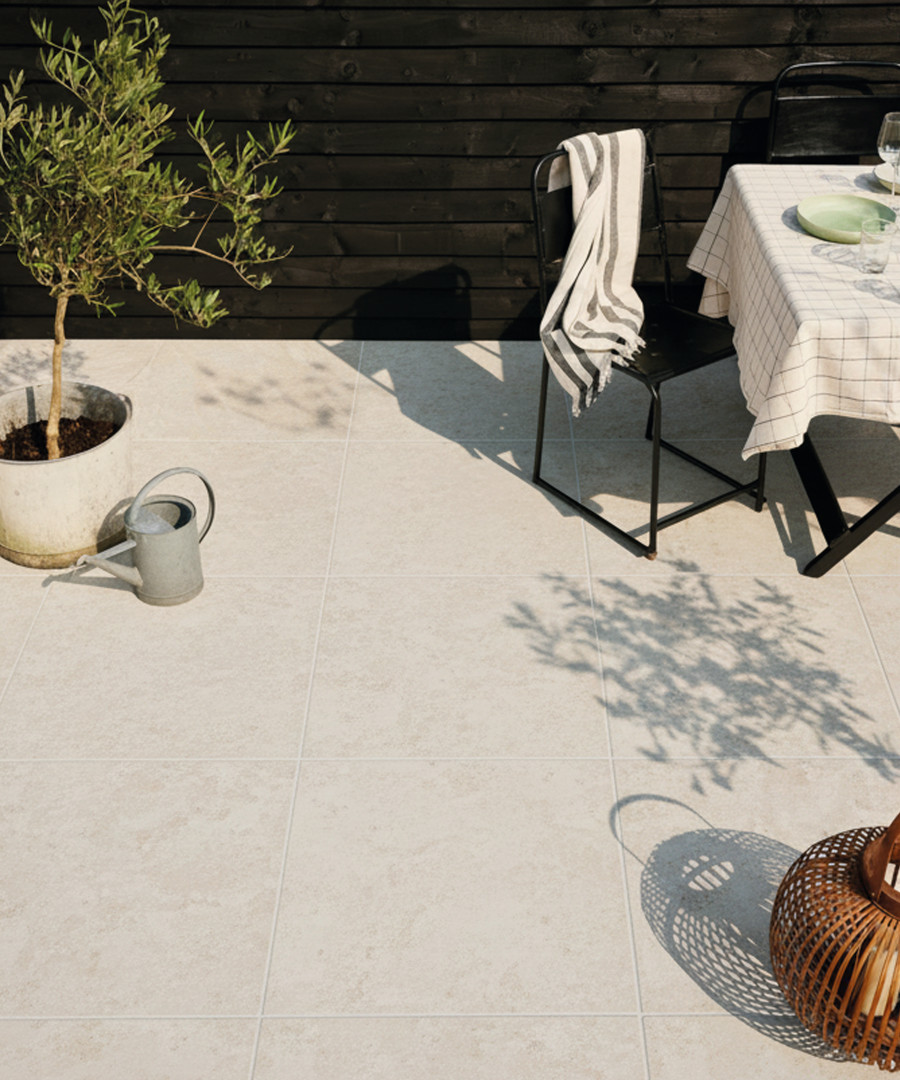
At Claybrook we’ve worked hard to offer beautiful wall tiles to decorate exterior zones that can withstand UK weather and changes in temperature, something not all wall tiles can cope with. These include porcelain that replicates cement and stone like the Camelot (pictured top left) indoor to outdoor, and the Merestone. Also available are decorated and patterned wall tile ranges which add a distinctive design element to outdoor areas, such as Discotheque or Semaphore.
Many of us like to run the same tile from kitchen to patio to create a seamless look without breaking into different tones or textures.
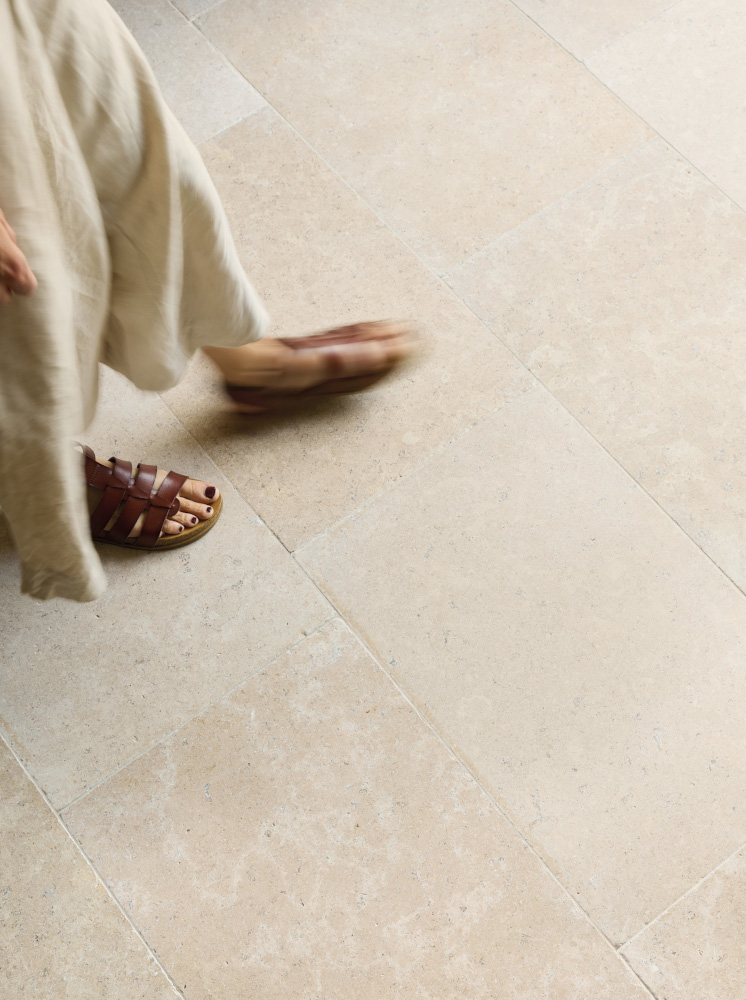

Gardens now tend to have larger hard areas and are used for longer periods of time, particularly as many of us work a 5-day week not 6 like our forebears, and give less of the garden over to lawn and flower beds as was historically the case. This patio area is the perfect fire-pit zone; somewhere to relax with friends and family or have an evening drink. In fact, many gardens provide a place for multiple activities like sports and parties, and require substantial areas of hard surface. The types of tiles available for these outdoor pursuits have to be fit for purpose as well as gorgeous, something we’ve delivered in our growing series of our outdoor collections including limestone effect.
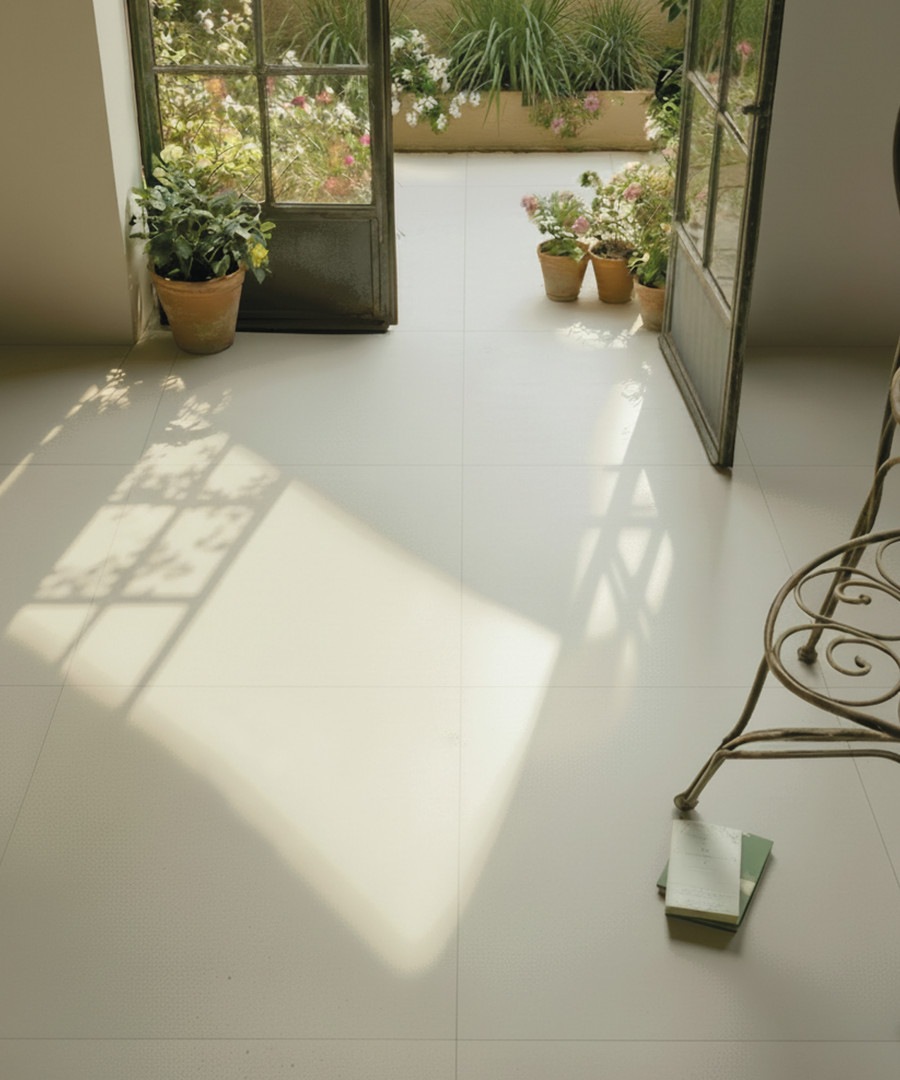
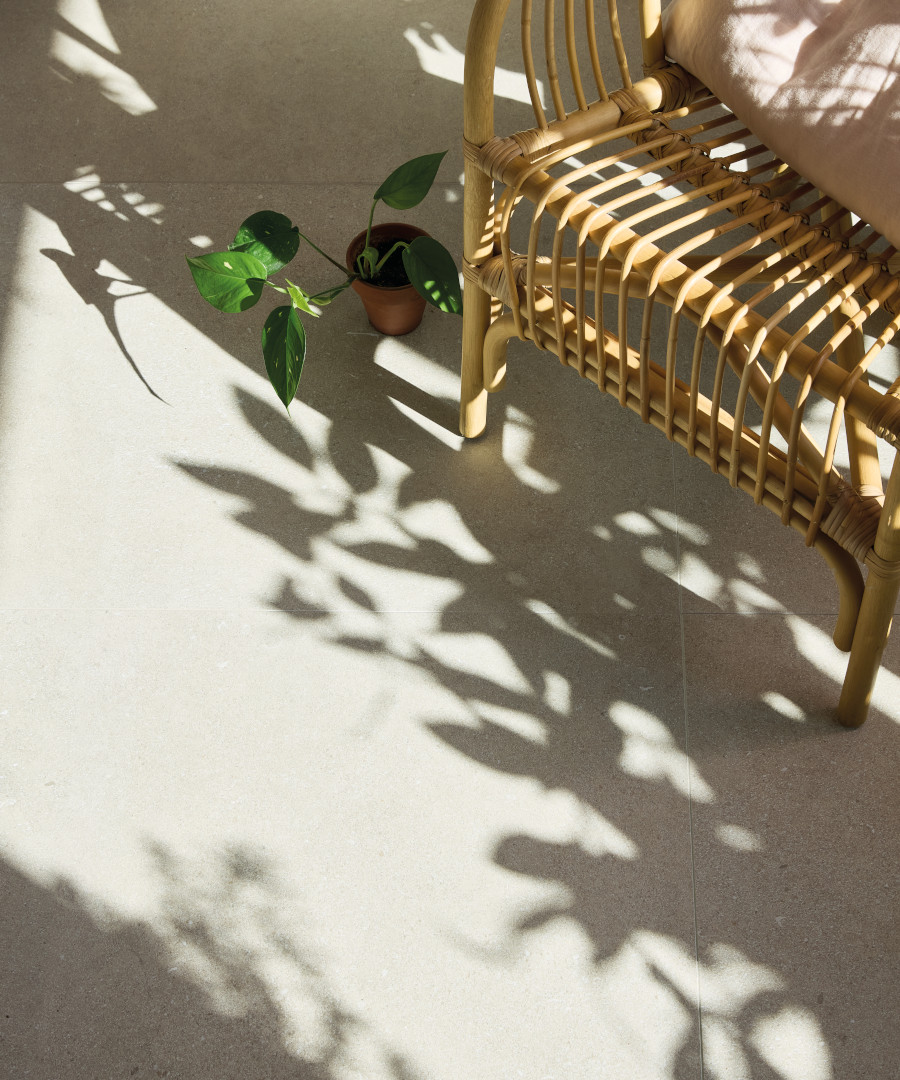
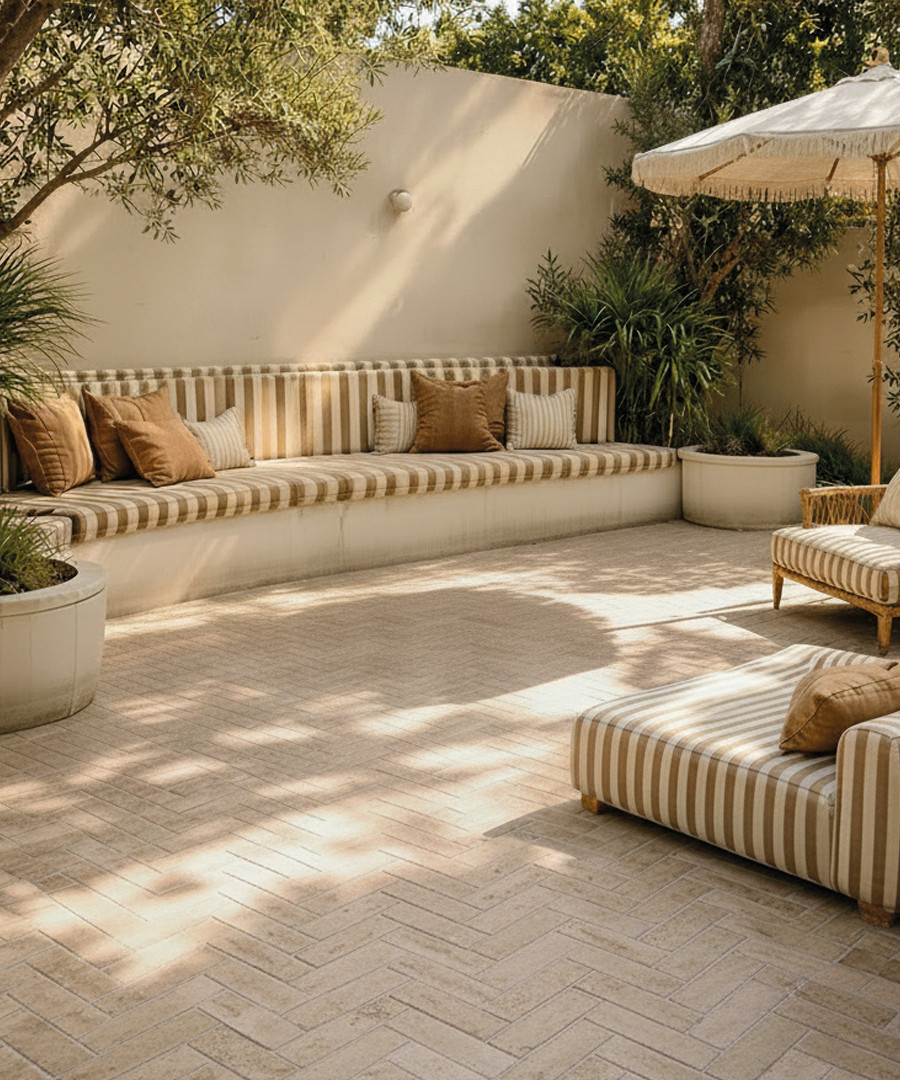
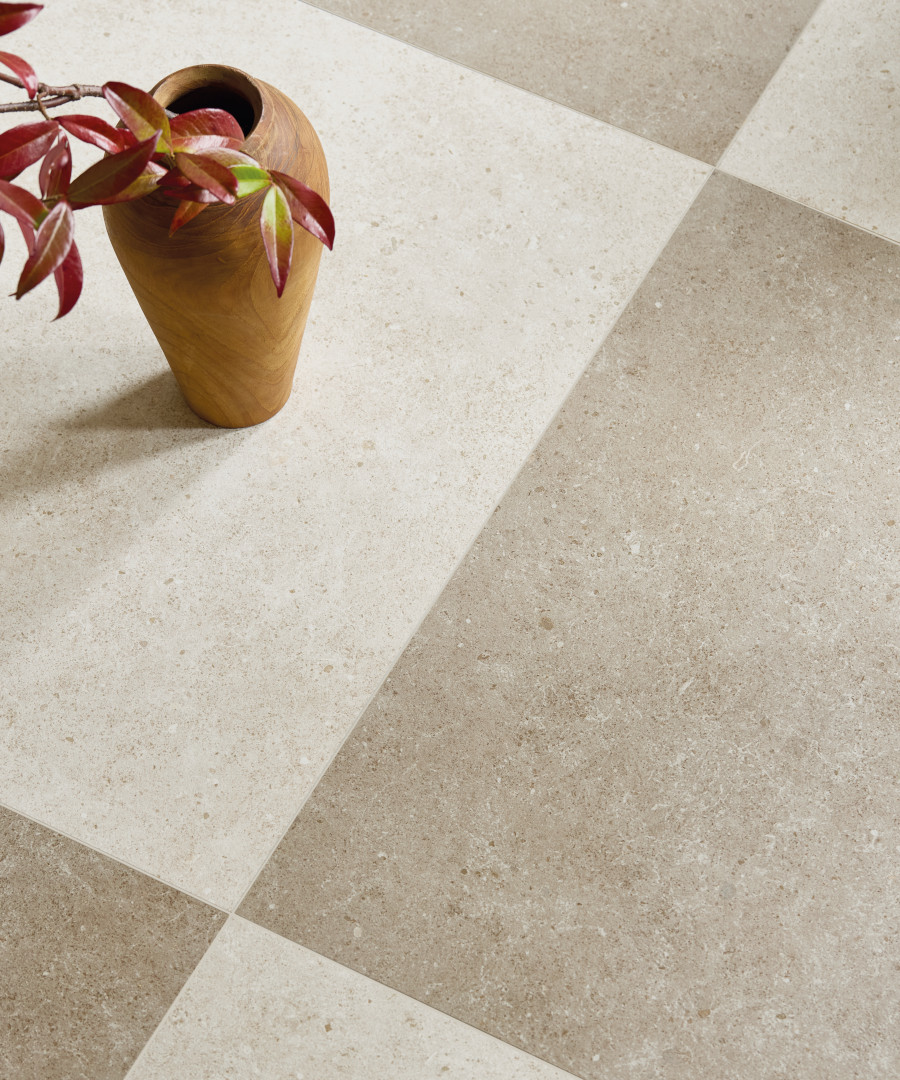
Many of us like to run the same tile from kitchen to patio to create a seamless look without breaking into different tones or textures. This continuous use, albeit with tiles of different depths laid to be flat and consistent underfoot, helps the flow of a space and guide people from inside to outside. From limestone to concrete and sandstone effect, many of them replicate natural materials but in more practical and easier to maintain porcelain, often in 2cm depth. They all cope brilliantly both with the cold on winter days outside, to the warmth inside from central or underfloor heating.
Technically Speaking
Top tips on selecting and installing outdoor porcelain tiles
Will tiles become slippery outside?
The floor tiles in our Outdoor Tiles section all have the appropriate slip rating for outdoor use. That means that they have a surface friction that is rough enough to be used in places where it will get wet (R11, if you’re feeling technical!) but not pool on the surface. So just like any exterior surface, good drainage is the key to making them completely safe, as even the most textured surface cannot overcome the aquaplaning combination of puddles and running/fast walking… that’s why the life guard blew their whistle when you’d try to run around the pool; for safety.
How weather resistant are outdoor tiles?
Porcelain is a highly durable material that can cope with temperature highs and lows. Our 2cm thick floor tiles are specifically designed to be both practical and extremely hardwearing. It also enables them to be laid on ground prepared in the same way as patio’s and garden pathways. For decorative walls outside, our slimmer decorative porcelains like Discotheque or Semaphore are frost-resistant and as long as they are correctly installed, will be weather resistant (see our Tile Installation Guide for guidance).
What depth of tile should I use?
Our outdoor porcelain floor tiles are 2cm deep, this means that they can be laid in the same manner as natural stone or paving slabs, but are better at withstanding wear, weight and our (ever-changeable) weather.
How should you grout external tiles?
It’s important to use the correct grout width (which you will find in the Technical Information for each tile) and the right grout. Large areas (more than 2-3 metres in any one direction) will also require expansion joints to allow for surface expansion and contraction, without causing damage to tiles. Grout like our Ardex FL product will also help with weed control, making it easier to keep those pesky dandelions at bay.
You can find recommendations for which grout and the appropriate adhesive to use in the Technical Information listed for each tile, or our Tile Installation Guide. You can also order all of the correct adhesive and grouts from us… after all we do the testing so you don’t have to. We also suggest using LTP EcoProtec Porcelain PreGrout Protector, as it will help the tiler when cleaning off the excess grout.
Do outdoor floor or wall tiles need sealing?
Our porcelain outdoor tiles do not require sealing.
How do I keep tiles clean?
We recommend cleaning our outdoor tiles with LTP EcoProtec Stone & Porcelain Aftercare Cleaner. Pressure washing is also effective, but try to avoid the grout joints, as too much water under pressure can cause them to crack and fail.
Speak to your fitter for further guidance, or email our friendly showroom sales teams at [email protected]
-
 Merestone Lime 90x60 - 2cm Outdoor£27.54 eachTotal Price £27.54 total
-
 Westchester Elmsford 60x120 - 2cm Outdoor£42.84 eachTotal Price £42.84 total
-
 Allaperto Plaster Lime 60x60 - 2cm Outdoor£19.63 eachTotal Price £19.63 total
-